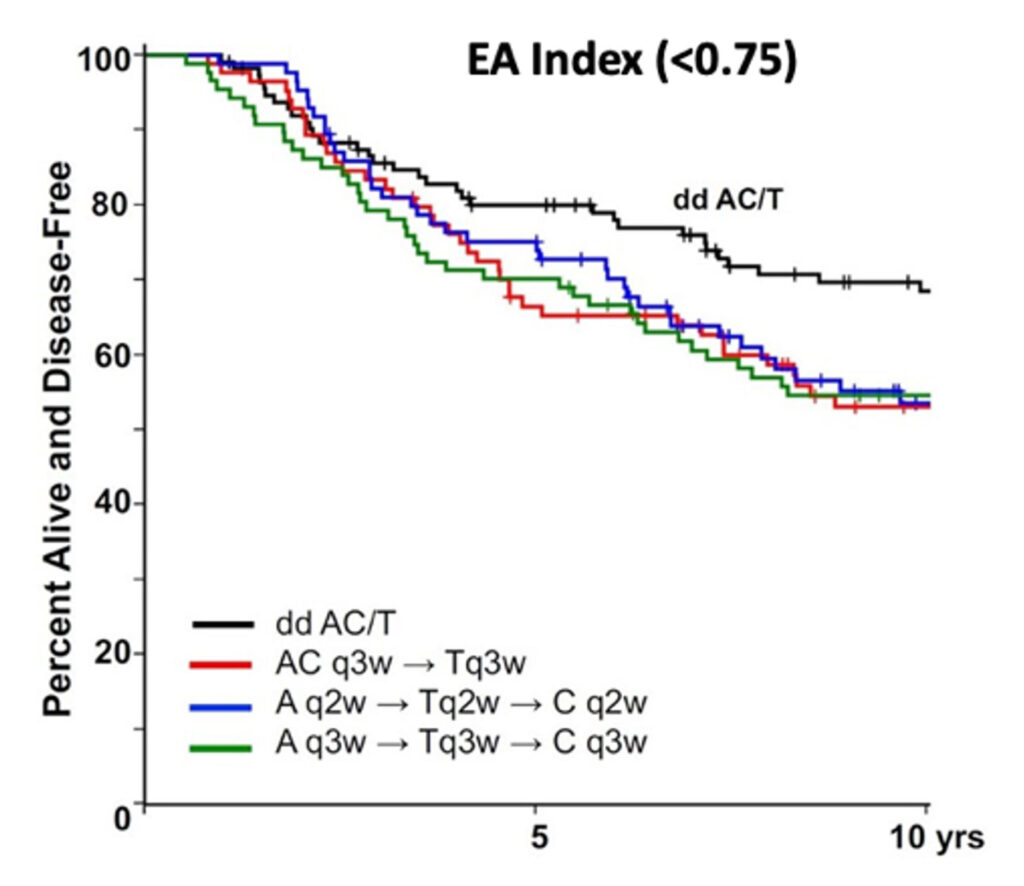
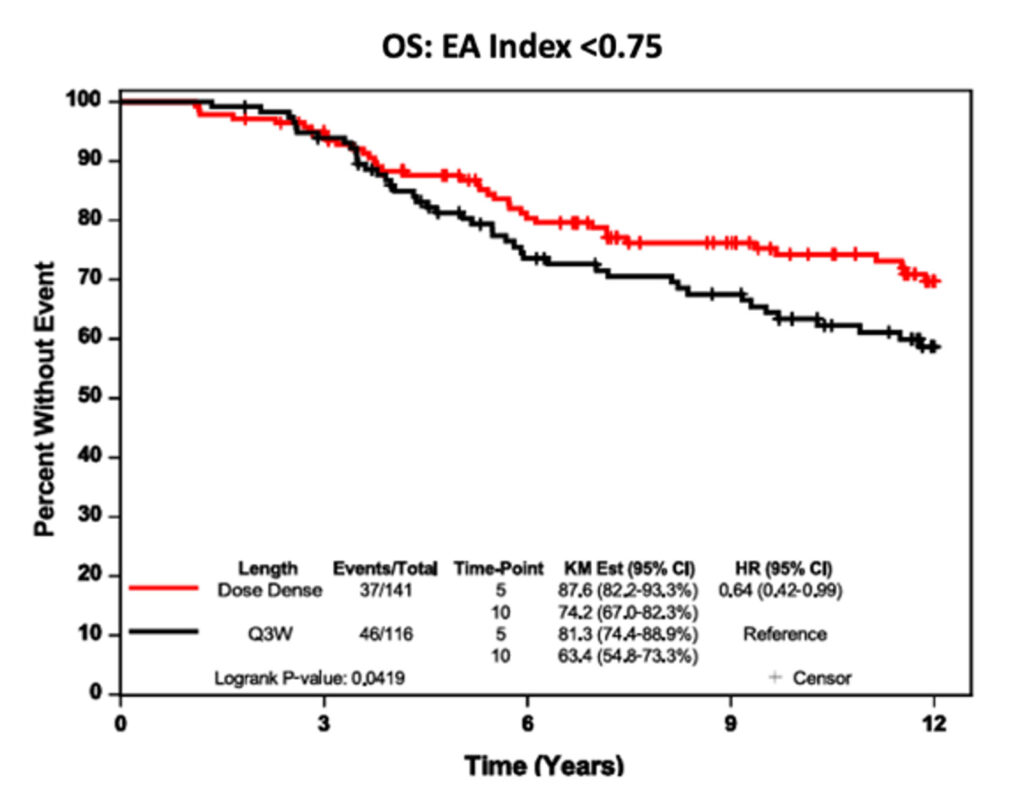
Patients with low levels of endocrine activity, determined by the Endocrine Activity Index (EAI), demonstrated improved survival when treated with dose-intense paclitaxel-based chemotherapy.
EAI has also been shown to predict DFS and breast cancer free interval (BCFI) benefit from adjuvant endocrine therapy.
Information to Tailor Treatment Decisions
EAI is a gene expression profiling test that measures endocrine activity in tumors. It is the only test to comprehensively analyze the estrogen and progesterone related hormone signaling pathway, providing predictive information which can be used to tailor treatment for your patient.
Clinical Evidence
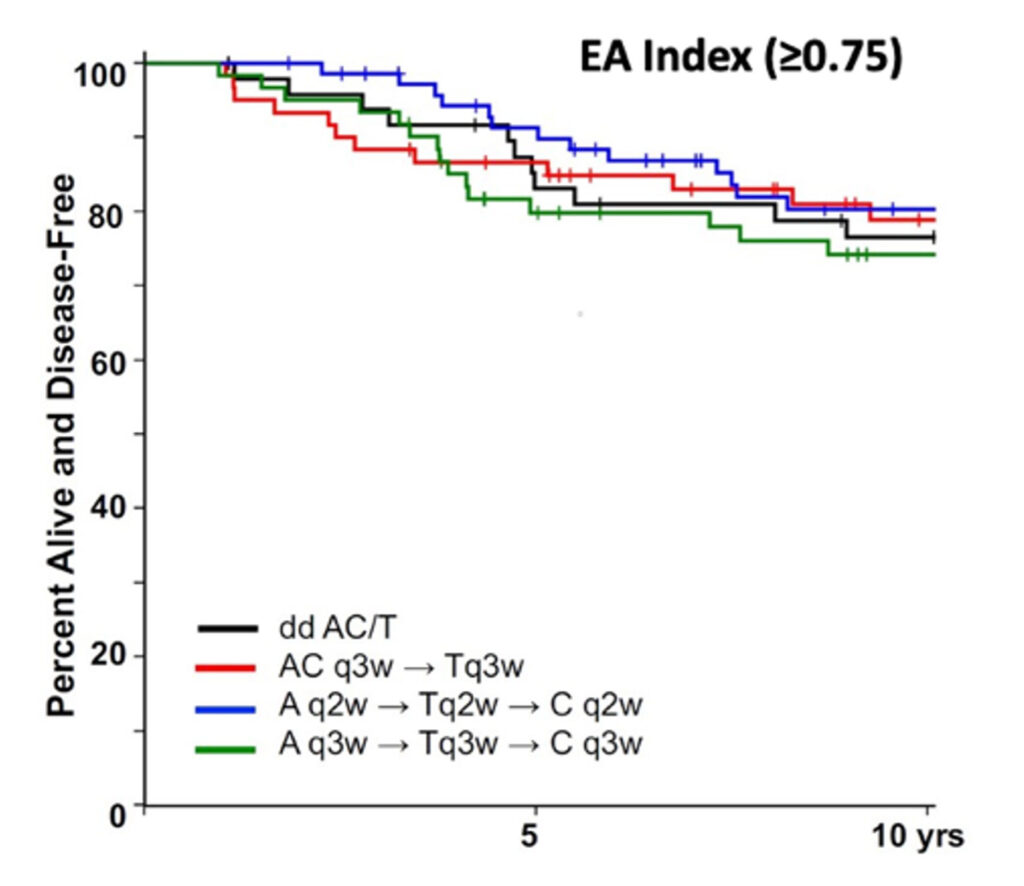
In the 12-year analysis of the CALGB 9741 trial, patients with node-positive HR+/HER2- breast cancer that had an EAI <0.75 had better outcomes with a dose dense paclitaxel regimen (dd AC/T). Patients with EAI <0.75 had higher disease-free survival (DFS) at 10 years when using dd AC/T compared to other AC-T regimens.1 Results were not affected by menopausal status.
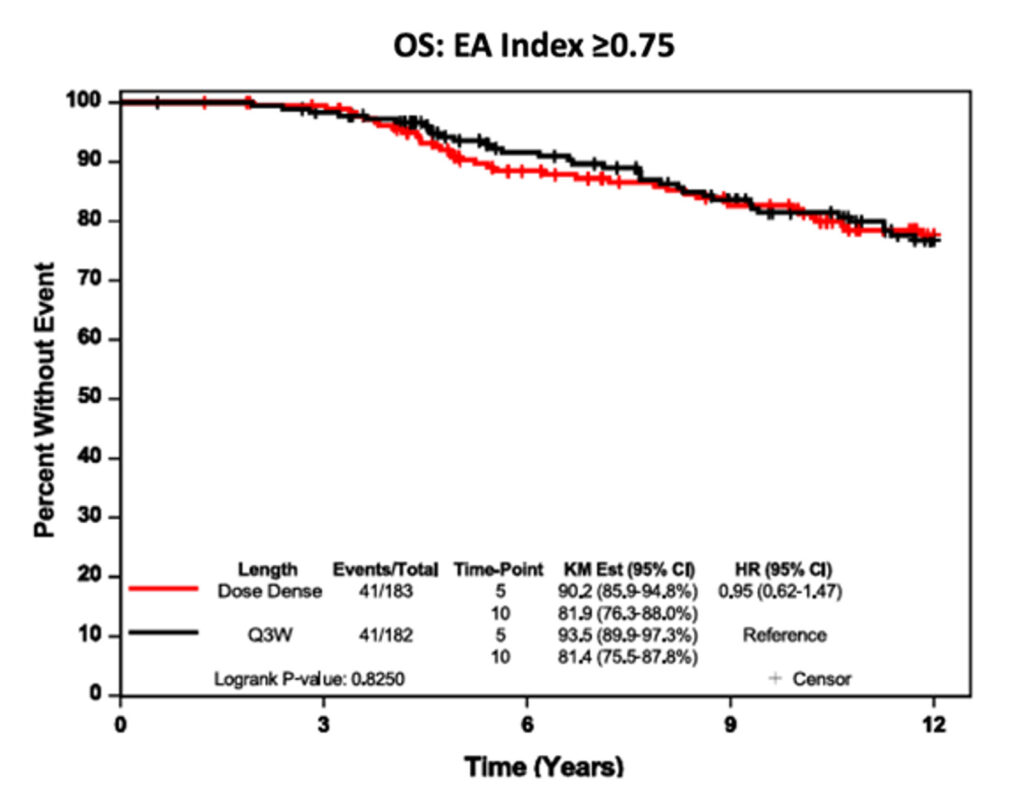
Patients with an EA Index <0.75, demonstrated a 30% improvement in OS when treated with ddAC-T compared to non-intense AC-T regimens. Patients with an EA Index >0.75 showed no additional benefit from a dose-intense regimen.
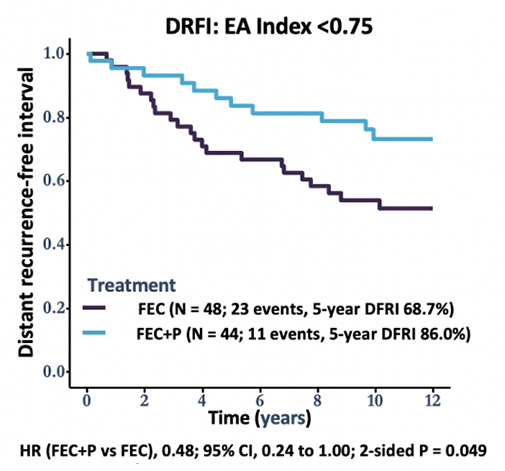
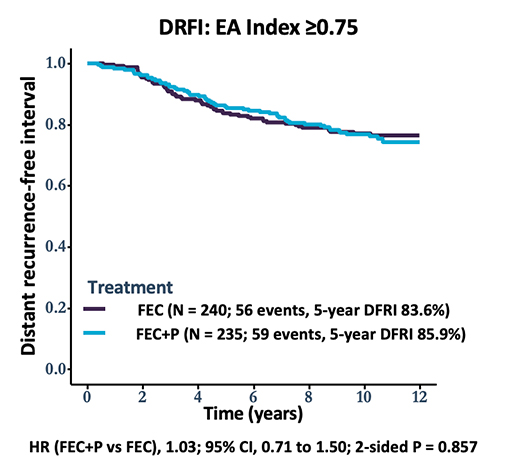
Analysis of patient samples from the GEICAM 9906 trial confirmed the ability of EA Index to predict benefit from addition of dose-intense paclitaxel to an anthracycline based chemo regimen in an independent population and using the same cutpoint identified in the CALGB 9741 trial.2 Patients with an EA Index <0.75, demonstrated a 55% improvement in DRFI when treated with ddAC-T compared to non-intense AC-T regimens.
Extended Endocrine Therapy Benefit
EAI has been shown to predict DFS and breast cancer free interval (BCFI) benefit from adjuvant endocrine therapy.
The PACS-01 trial showed that an EAI >1.50 was predictive of adjuvant endocrine therapy DFS benefit when comparing patients not receiving endocrine therapy vs those receiving Tamoxifen.
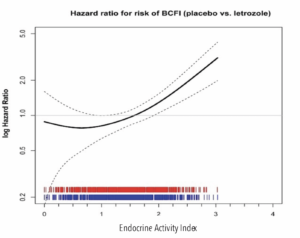
In the NSABP B-42, tumors with EAI >1.50 demonstrated significant BCFI benefit from extending endocrine therapy beyond 5 years (HR 0.53; ~7% absolute 10-year recurrence reduction)10, whereas tumors with an EAI ≤1.50 showed no statistically significant benefit (HR 0.82; p>0.05). Increasing values of EAI were associated with greater relative benefit from extended letrozole therapy.
Report Overview
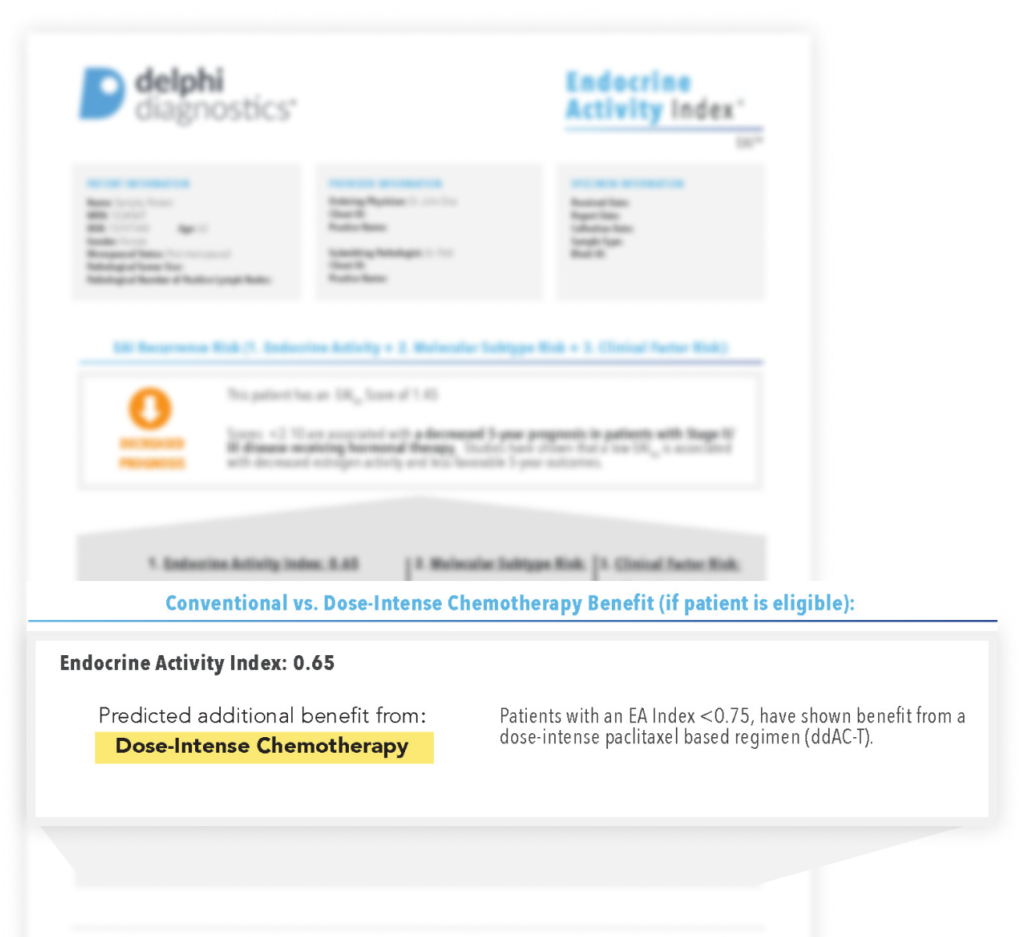
The EAI report provides information on which patients may benefit from a dose-intense paclitaxel-based chemotherapy vs. conventional chemotherapy regimen.
Contact Us
Want to learn more about the Endocrine Activity Index (EAI) or Delphi Diagnostics?
1.Metzger O.F., et al., Adjuvant Dose-Dense Chemotherapy in Hormone Receptor–Positive Breast Cancer. JCO43, 1229-1239(2025). DOI:10.1200/JCO-24-01875
2.Martin M, et al. PS4-01: Predictor of benefit from dose-dense paclitaxel chemotherapy for patients with hormone receptor-positive HER2-negative breast cancer. A GEICAM/9906 sub-study. San Antonio Breast Cancer Symposium 2024.
OS = Overall Survival ; DRFI = Distant Recurrence-Free Interval